Transplant in China is a step, researchers say
Researchers found no signs of immune rejection or inflammation, and blood flow was adequate, per CNN. Peter Friend from the University of Oxford stated, “There was good evidence of compatibility, which is really exciting.” The study was inconclusive, as the patient’s family requested the liver’s removal. Wang noted, “We could not see whether the pig liver could support a patient with severe liver failure.” This transplant raises hopes for using pig livers to assist patients on waiting lists.
Health & Wellness🧬
Abstract
The shortage of donors is a major challenge for transplantation; however, organs from genetically modified pigs can serve as ideal supplements1,2. Until now, porcine hearts and kidneys have been successively transplanted into humans3,4,5,6,7. In this study, heterotopic auxiliary transplantation was used to donate a six-gene-edited pig liver to a brain-dead recipient. The graft function, haemodynamics, and immune and inflammatory responses of the recipient were monitored over the subsequent 10 days. Two hours after portal vein reperfusion of the xenograft, goldish bile was produced, increasing to 66.5 ml by postoperative day 10. Porcine liver-derived albumin also increased after surgery. Alanine aminotransferase levels remained in the normal range, while aspartate aminotransferase levels increased on postoperative day 1 and then rapidly declined. Blood flow velocity in the porcine hepatic artery and portal and hepatic veins remained at an acceptable level. Although platelet numbers decreased early after surgery, they ultimately returned to normal levels. Histological analyses showed that the porcine liver regenerated capably with no signs of rejection. T cell activity was inhibited by anti-thymocyte globulin administration, and B cell activation increased 3 days after surgery and was then inhibited by rituximab. There were no significant peri-operative changes in immunoglobulin G or immunoglobulin M levels. C-reactive protein and procalcitonin levels were initially elevated and then quickly declined. The xenograft remained functional until study completion.
Main
Liver transplantation is the most effective treatment for end-stage liver diseases. However, the number of allogeneic donations fails to meet the growing demand for transplants. To address the shortage, porcine organs are being considered as an ideal supplement given their compatible physiological function and size1,2. Moreover, theoretical and technical advances in gene editing have enabled the removal of key genes that mediate hyperacute rejection, such as glycoprotein α-galactosyltransferase 1 (GGTA1) and cytidine monophosphate-N-acetylneuraminic acid hydroxylase (CMAH), and the insertion of human transgenes that facilitate xenograft compatibility, including thrombomodulin and haem-oxygenase 1 (refs. 8,9,10,11).
Methods
Recipient selection and ethical review: The recipient was an adult, who was diagnosed with brain death on 7 March 2024. The recipient maintained stable circulation and had no underlying diseases


luxury | February 3, 2025
Private Islands for sale under $500,000
Luxury | January 28, 2025
Top 10 Most Expensive Rolex Watches on the Market
World | March 3, 2025
Ugandans Fear AIDS Will Spread as Health Clinics Close

UNDERSHOW- Pre Release
How the Elite Profit from War, Waste, and Government Secrets[Part 1]
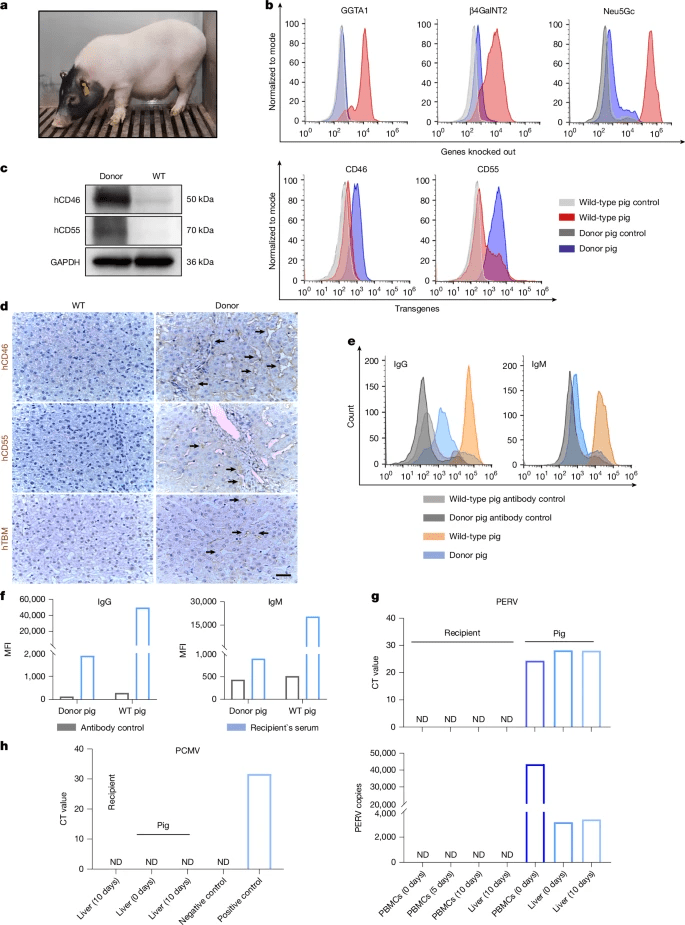
From: Gene-modified pig-to-human liver xenotransplantation
In limited attempts, surgeons in the US and China have placed pig hearts, kidneys, and a thymus gland in patients. Some patients have made recoveries and left the hospital, while others died within a few months—though it’s not clear the transplants were the cause. Researchers have had more success transplanting gene-edited pig kidneys and hearts into people than livers, per CNN. Dealing with livers “is so difficult,” Wang said. “We all know the function of the liver is so complicated.” More than 100,000 people in the US are on organ transplant waiting lists. (More health & wellness stories.)
Source:
Materials provided by Nature Original written by Kai-Shan Tao, Zhao-Xu Yang, Xuan Zhang, Hong-Tao Zhang. Note: Content may be edited for style and length.